

On November 8, 1956, Patsy Cline recorded “Walkin’ After Midnight” in Nashville. Seventy years later, the session remains a landmark in the story of a voice that helped define country music.
For this November 8 anniversary, Country Road Entertainment looks back at the original recording, the television performance that followed and the lasting pull of one of Cline’s signature songs.
The November 8, 1956 Recording Session
Session researcher G. E. Hewitt’s Patsy Cline Discography dates the original “Walkin’ After Midnight” master to November 8, 1956, at Bradley Studios, 804 16th Avenue South in Nashville. The session is listed as running from 10 p.m. to 1 a.m., an appropriately late setting for a song built around the restless hours after dark.
The song was written by Don Hecht and Alan Block. The discography identifies Paul Cohen as producer and Owen Bradley on piano and directing the session, with Cline’s voice supported by a band that included guitar, steel guitar, fiddle, bass and drums.
Those details place a familiar recording back inside a specific working night. Before it became a standard, it was a singer, a song and musicians shaping a performance in a Nashville studio.
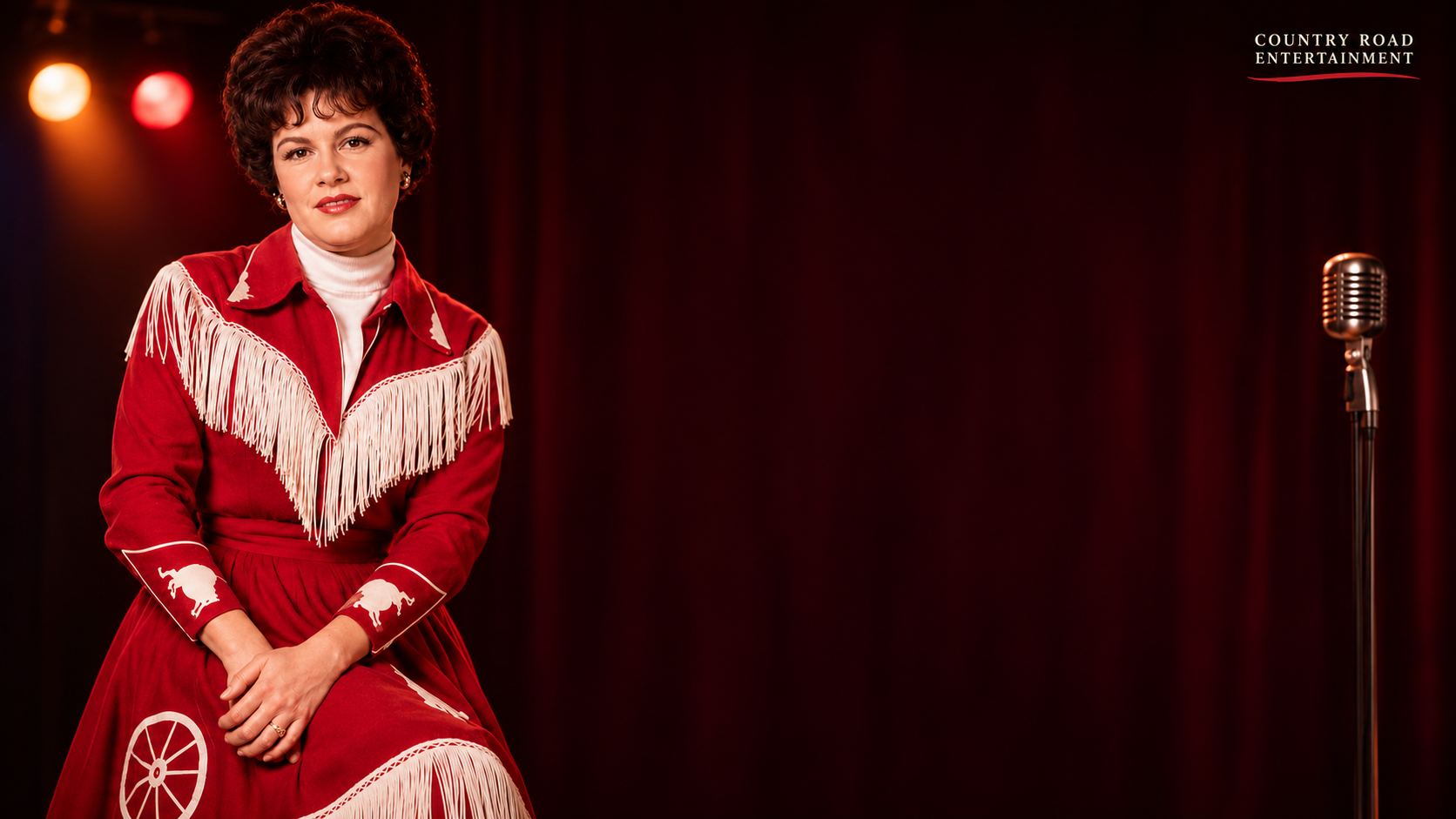
A Recording Anniversary, Then a 1957 Breakthrough
November 8 marks the recording anniversary. The record’s national breakthrough belongs to the following year, when Cline performed “Walkin’ After Midnight” on Arthur Godfrey’s Talent Scouts on January 21, 1957.
The Country Music Hall of Fame and Museum identifies that appearance as the turning point after several unsuccessful singles. The song reached No. 2 on the country chart and No. 12 on the pop chart, introducing Cline to listeners well beyond her existing audience.
Keeping the dates separate makes the story more interesting. The performance listeners know was already on tape before the television spotlight arrived. Recording, public exposure and chart success were connected steps, each with its own place in the timeline.
Why “Walkin’ After Midnight” Still Connects
The song’s appeal begins with a feeling that needs little explanation: being awake when the world has gone quiet, searching for somebody who is no longer there. Its nighttime setting gives loneliness somewhere to go. The movement in the title contrasts with a heart that has not moved on.
Cline’s delivery lets the listener hear both strength and longing. The words remain direct, while the shape of a phrase can carry a much larger emotional story. A song can be easy to recognize and still reward another listen; this recording does both.
That is part of the pleasure of returning to an older country record. The equipment, musical setting and route to an audience belong to another era, but the feeling can arrive with very little translation. You do not need to have lived through 1956 to understand the person at the center of the song.
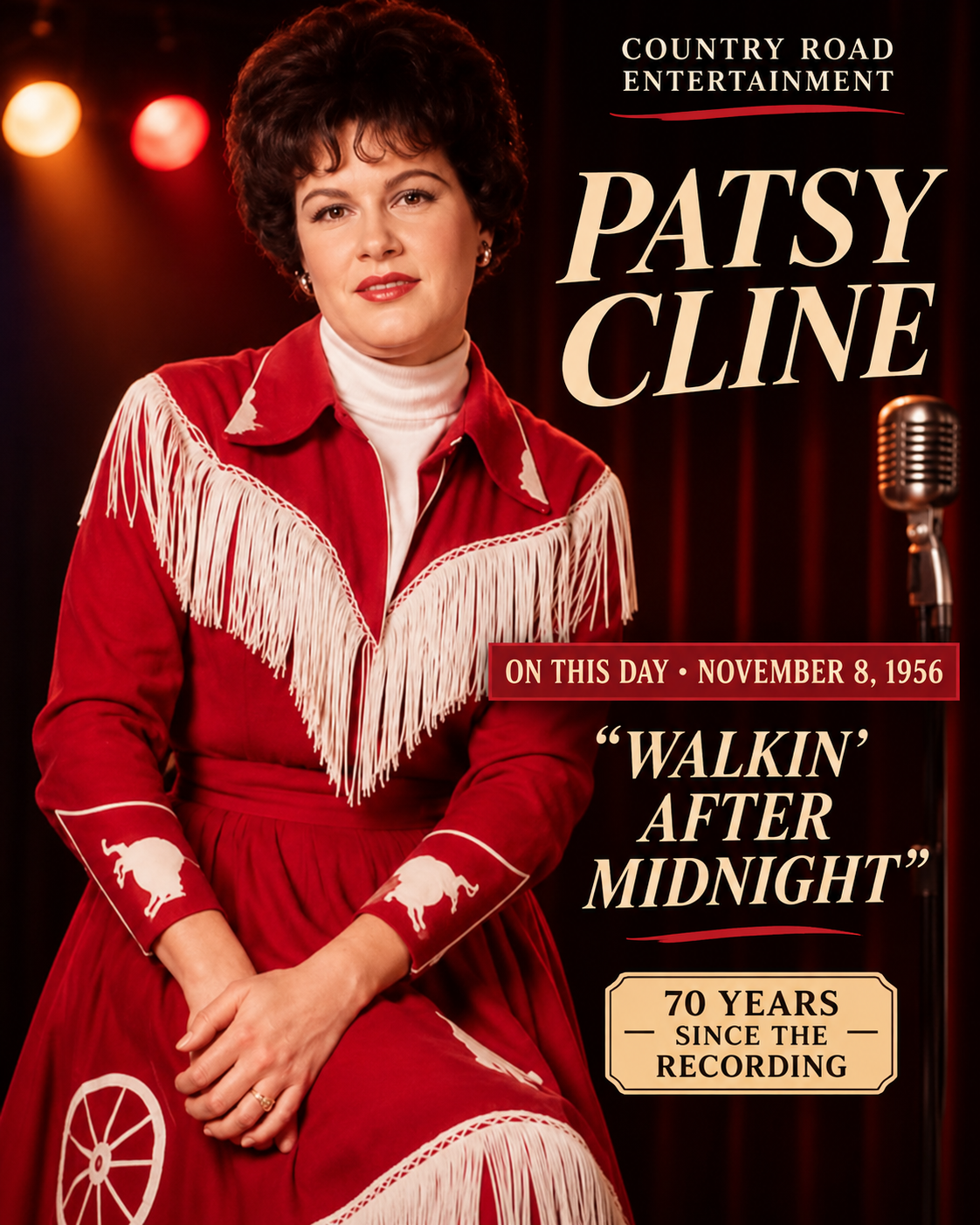
One Early Chapter in a Lasting Legacy
“Walkin’ After Midnight” was an early breakthrough in a career that later brought “I Fall to Pieces,” “Crazy” and “She’s Got You.” In 1973, Cline became the first solo woman elected to the Country Music Hall of Fame.
The anniversary offers a chance to listen with that larger career in mind without rushing past the early recording itself. Put on the original version and notice the balance between the band’s movement and the patience of the vocal. Then return to a later Cline favorite and hear what your own ear connects between them.
Keep Country Music’s Stories in the Conversation
Country Road Entertainment follows today’s voices through our artist directory and CRE Rising 25, alongside the music history that gives the genre its roots. Explore more coverage in CRE News.
Where does “Walkin’ After Midnight” rank among your Patsy Cline favorites? Share the song you always return to on CRE’s social channels.
Sources: G. E. Hewitt’s Patsy Cline Discography session research; the Country Music Hall of Fame and Museum’s Patsy Cline biography. The anniversary refers to the original 1956 recording.
Country Road Entertainment | Country Music Lives Here. | Established 2017