
Blood, bullets, restless spirits, and a mysterious room that became one of the American West’s enduring ghost legends.
CIMARRON, NEW MEXICO — The St. James Hotel carries the scars of the frontier in its bullet-marked ceiling. Upstairs, Room 18 carries something harder to pin down: the legend of a gambler who supposedly never checked out. For CRE founder Eddie Smith, who explored the hotel in 1995 after a Philmont backpacking expedition, this Halloween story begins with a place he remembers firsthand.
Blood, Bullets, and the Haunted History of an Old West Landmark
Some places in the American West seem determined to hold onto their past. The historic St. James Hotel is one of them.
The building’s history and its ghost stories are often told together. Yet they deserve different kinds of attention: one rests on records and surviving architecture; the other on reported experiences and generations of storytelling.
Where does the history end and the haunting begin?
A Saloon Born on the Santa Fe Trail
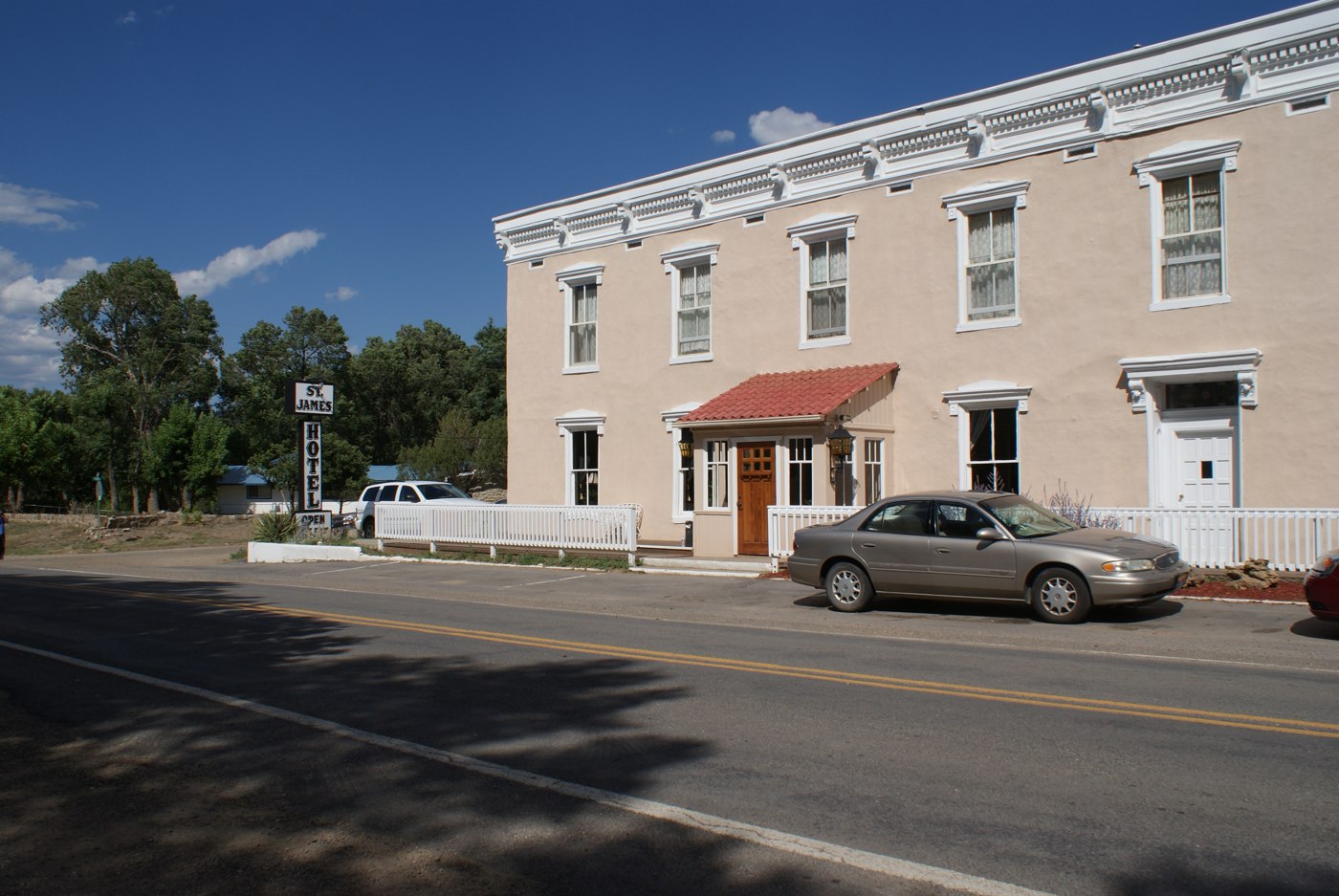
The familiar founding date is 1872. According to the National Park Service, Henri Lambert, identified in its account as a former personal chef to President Abraham Lincoln, established a saloon here that year. By 1880, it had developed into a two-story hotel. The date belongs to the saloon’s beginnings, rather than the construction of every part of the building visitors know today.
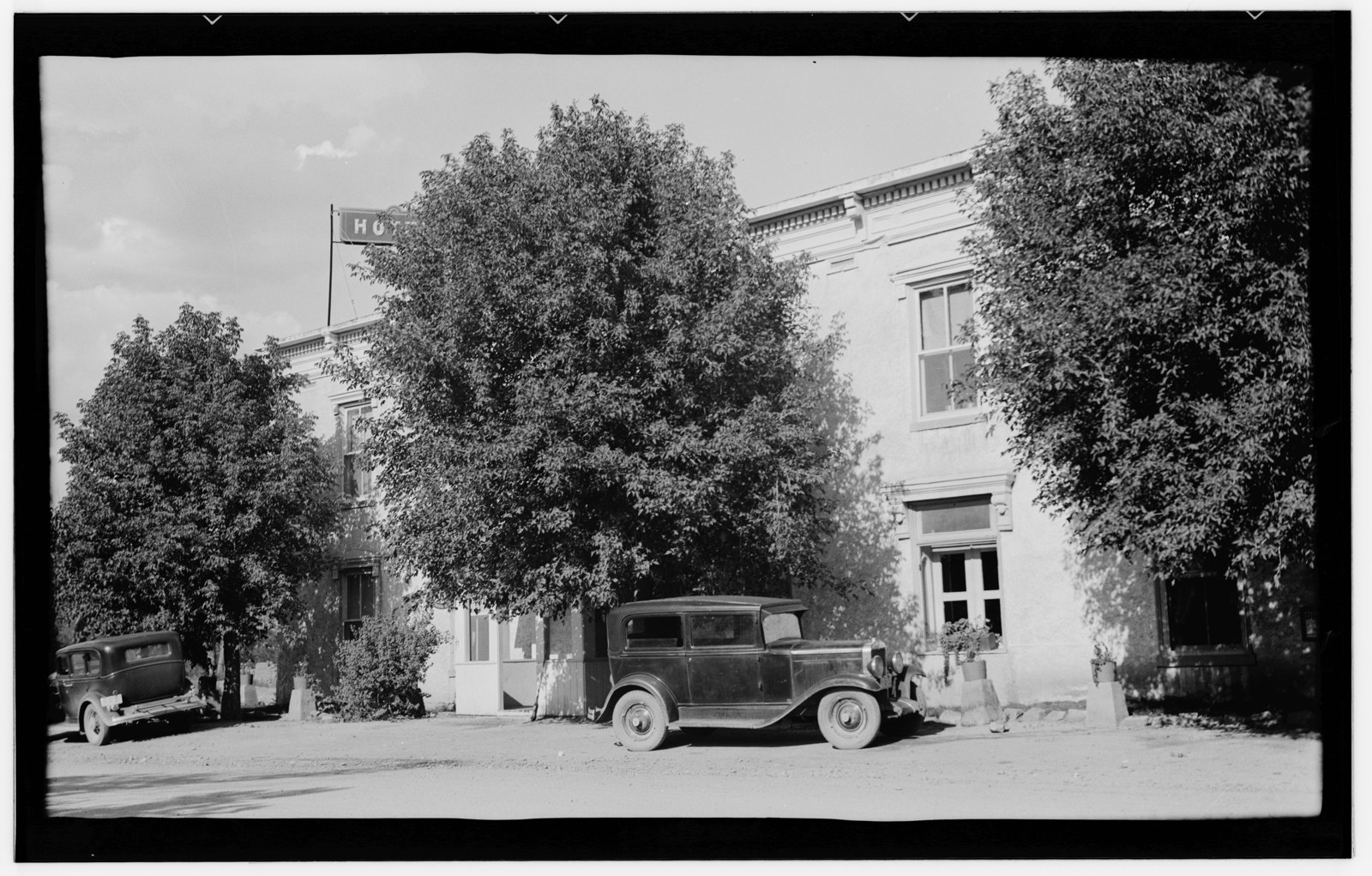
Cimarron stood in a region shaped by Santa Fe Trail commerce, ranching and conflicts over land. The hotel became part of that frontier community, offering food, drink and lodging to people passing through.
Its reputation also includes violence. A University of New Mexico history attributes a count of 26 killings to Lambert’s son Fred. That often-repeated figure should be understood as a historical account, rather than a death toll independently established for this feature.
Buffalo Bill Cody, Jesse James, Wyatt Earp and Billy the Kid appear among the figures associated with the property in National Park Service and hotel histories. Those associations do not establish every later story about a particular visit, room or poker game.
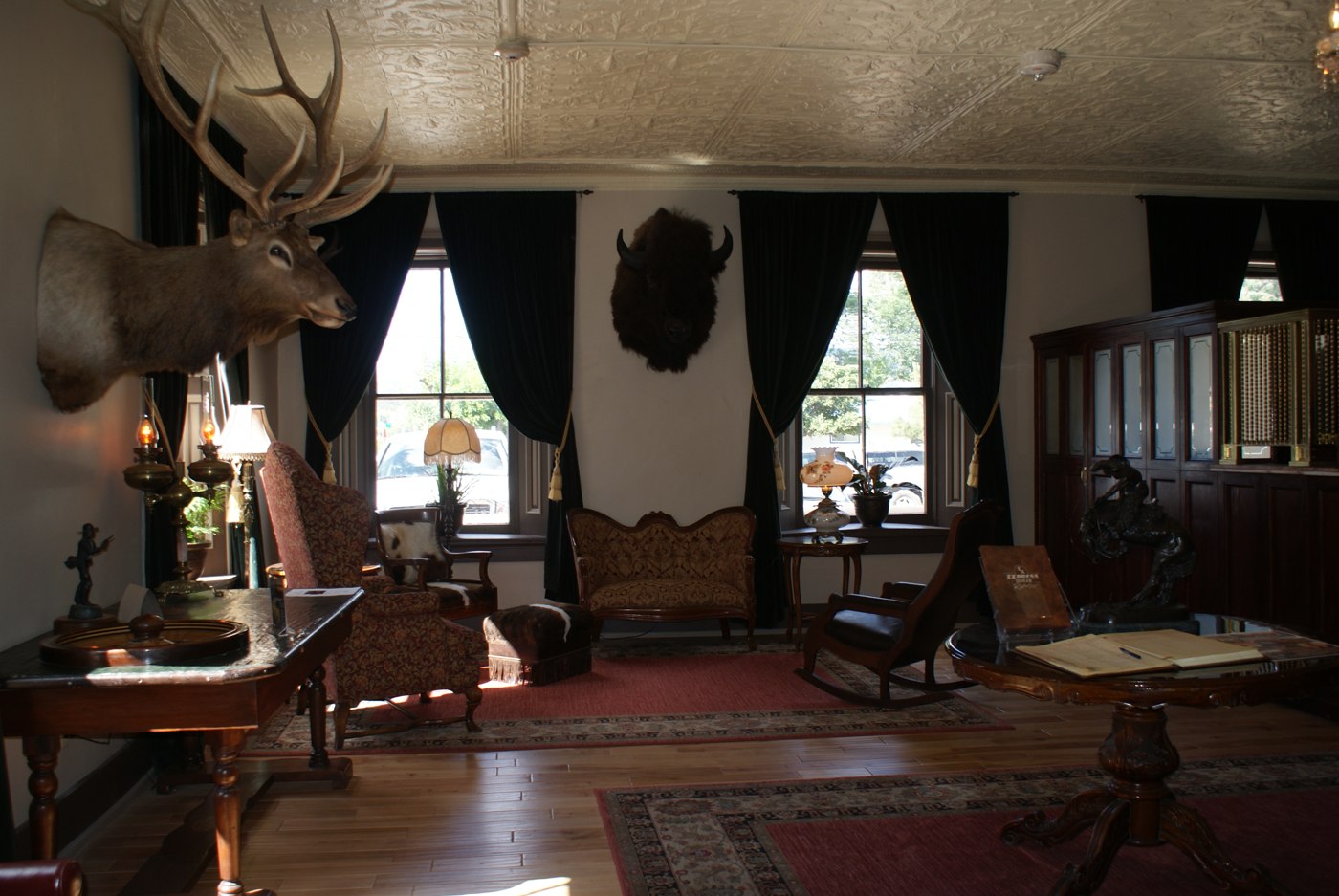
The most tangible reminder is overhead. The National Park Service identifies surviving bullet holes in the pressed-tin ceiling of what is now the dining room, formerly the bar. They are part of the building’s recorded history, not evidence of a haunting.
Imagine sitting beneath that ceiling, considering the arguments, gunfire and uncertainty that frontier life could bring. At the St. James, the Old West is more than a setting borrowed from the movies.
Room 18: The Gambler Who Never Left
Of all the supernatural stories attached to the hotel, none is better known than Room 18.
In a familiar version of the legend, a gambler named T. J. Wright won the hotel in a poker game, was shot before he could enjoy his winnings, and died in the room. His angry spirit supposedly remained.
Accounts describe frightening noises, an unwelcome presence and people feeling that they should leave. These are paranormal claims, not verified supernatural events. The operator’s published history says Room 18 remains unbooked as part of the hotel’s ghost tradition.
But the story has a complication that deserves more than a passing mention.
Researcher Cody Polston disputes the alleged murder. In his investigation, he reports finding a T. J. Wright in an 1880 hotel census record and a later Albuquerque census in 1920. He argues that the later record contradicts the supposed frontier-era death at the St. James. CRE has not independently established that the two records identify the same person.
Polston also traces the development of the haunting narrative through 1980s newspaper coverage. That reporting places the poker-game explanation in a much later paranormal investigation, rather than establishing it with a contemporary nineteenth-century murder record.
The distinction matters. A genuinely old building can acquire a newer legend, and a dramatic story can become familiar without becoming documented history.
Room 18 remains central to the hotel’s haunted reputation. What remains uncertain is the history behind the identity assigned to its alleged occupant.
The Woman Associated With Perfume
Room 18 is not the hotel’s only ghost tradition. Another involves an alleged female presence often identified in later folklore as Mary Lambert, wife of the founder.
Stories associate her with a floral fragrance, sometimes described as roses. Earlier newspaper coverage reproduced in Polston’s research describes perfume and says the alleged presence was named Mary after Mary Lambert. That is a narrower claim than proof that anyone saw or identified Lambert herself.
Footsteps, unusual sounds and fleeting figures also belong to the hotel’s collection of reported experiences. None establishes a supernatural cause. They do, however, show how a historic building becomes a setting for stories that visitors carry away and retell.
From the Tooth of Time to the St. James Hotel: A Personal Journey
For Country Road Entertainment founder Eddie Smith, the St. James holds a connection dating back to 1995.
That year, Smith participated in a backpacking expedition at Philmont Scout Ranch in northern New Mexico. The journey marked an extraordinary milestone: at age 15, he was presented with his Eagle Scout medal atop the Tooth of Time, one of Philmont’s most recognizable landmarks.
High above the surrounding landscape, the presentation became an unforgettable moment in his Scouting journey.
But the adventure did not end when the backpacking expedition was over. After coming off the trail, Smith and his group had an opportunity to visit nearby Cimarron. Already fascinated by history and the American West, he went exploring.
His curiosity led him to the St. James Hotel.
Smith recalls watching an Unsolved Mysteries video about the hotel in the lobby. He also toured the building and saw the historic bullet holes for himself.
There was no personal paranormal encounter.
What stayed with him was the opportunity to walk through a place where the past remained physically visible. Decades later, that visit is part of the personal history behind CRE’s fascination with historic destinations and the stories found along America’s back roads.
The Real History Behind the Haunting
The St. James is compelling even without ghosts. Its architecture offers a tangible connection to the people who built, worked in and passed through the hotel.
The Santa Fe Trail carried commerce and travelers across a landscape with histories far older than the hotel. Cimarron’s frontier years brought opportunity, territorial disputes and violence; the St. James became one of the places where those histories intersected.
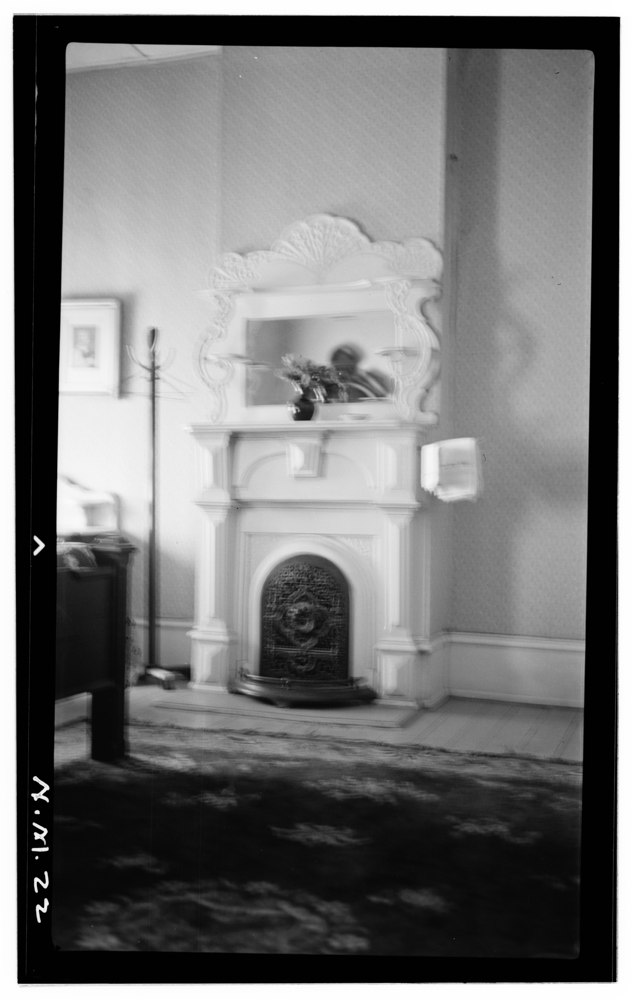
Its surviving features invite visitors to look closely. An old doorway or fireplace does not prove a ghost story. It does connect the present with an earlier building and the lives once lived inside it.
That is why separating the layers makes the story stronger. The bullet-marked ceiling is a documented feature. The gambler’s fatal poker victory is a disputed legend. Smith’s 1995 visit is his firsthand recollection. Each belongs in the story, with its origin made clear.
Would You Open the Door?
More than 150 years after the saloon’s beginnings, the St. James still invites people to imagine the lives behind its walls.
The gunfighters are gone. The Santa Fe Trail’s trading days have passed. But the building and its stories remain.
Perhaps the most haunting part is not what someone claims to hear in the night. Perhaps it is the knowledge that so much real history unfolded here, while other details have slipped beyond easy recovery.
This Halloween, Haunted Country Roads leaves you with a hypothetical question: if someone handed you the key to Room 18, would you spend the night?
Not a chance — or hand me the key?
Planning a visit: As checked for this feature, M Vacation Properties & Resorts markets the St. James Hotel and provides booking links; its history page says Room 18 remains unbooked. New Mexico Magazine’s September 2024 closure account describes an earlier chapter. Confirm current access, tours, dining and room availability directly with the operator before traveling. The question above is an invitation to imagine, not an offer to book Room 18.
Continue the series: Eddie’s firsthand night at Flagstaff’s Hotel Monte Vista.
Haunted Country Roads is an original Country Road Entertainment series exploring historic locations, unexplained legends, and the stories hidden along America’s back roads. Historical claims and reported paranormal experiences are distinguished wherever possible.
Founder Eddie Smith’s 1995 Philmont expedition, Eagle Scout medal presentation atop the Tooth of Time at age 15, and St. James Hotel visit are based on his firsthand recollection. No paranormal encounter at the St. James is attributed to him.
Sources and Image Credits
- National Park Service — St. James (Don Diego) Hotel, Cimarron: saloon founding, hotel development, historical associations and ceiling.
- Library of Congress — Historic American Buildings Survey, HABS NM-115: architectural documentation and archival photographs.
- University of New Mexico — Santa Fe Trail Historic Sites: hotel history and the reported Fred Lambert count.
- St. James Hotel — historical information and M Vacation Properties & Resorts — St. James Hotel: operator’s history, ghost tradition and current visitor-information source.
- Cody Polston — St. James Hotel research, especially his investigation of T. J. Wright and the Room 18 narrative. His census identification and conclusions are attributed to him.
- Will Grant, New Mexico Magazine — An Ode to the St. James Hotel, October 2024: context for the earlier closure, not a statement of current operating status.
Individual image sources, creators and rights appear in the captions. HABS photographs are public domain in the United States; web copies are proportionally resized and JPEG-optimized. Cyborglibrarian’s two 2009 photographs remain under Creative Commons Attribution-ShareAlike 2.0; resized versions retain that license. No endorsement is implied.
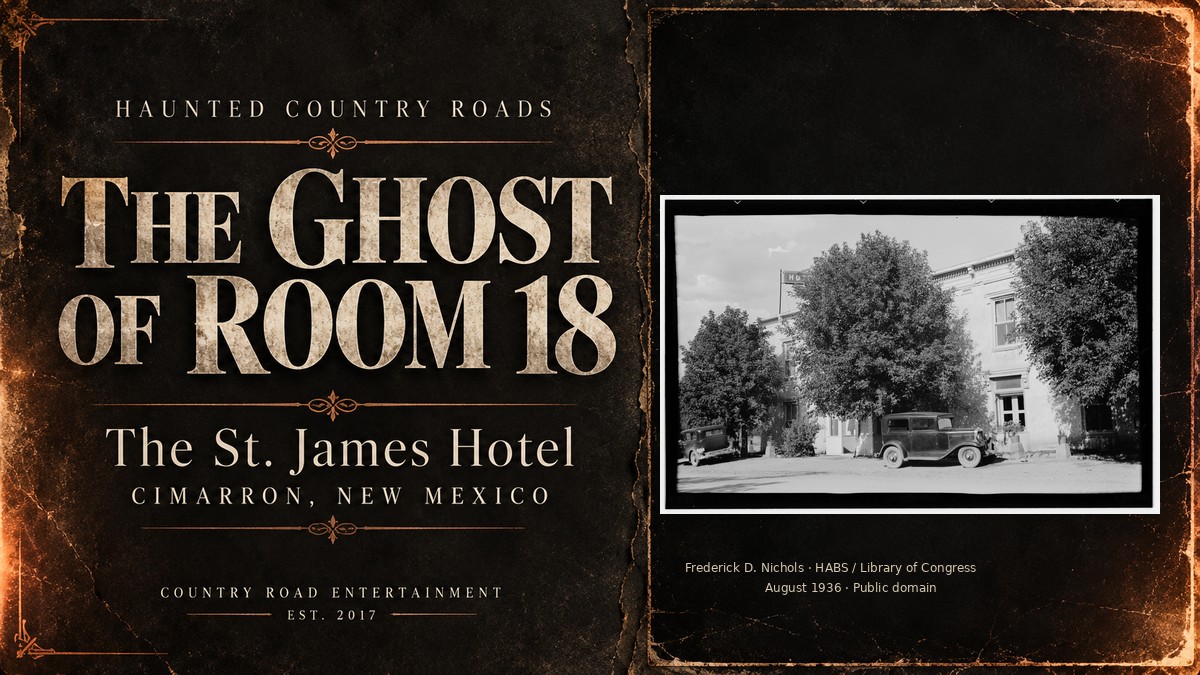
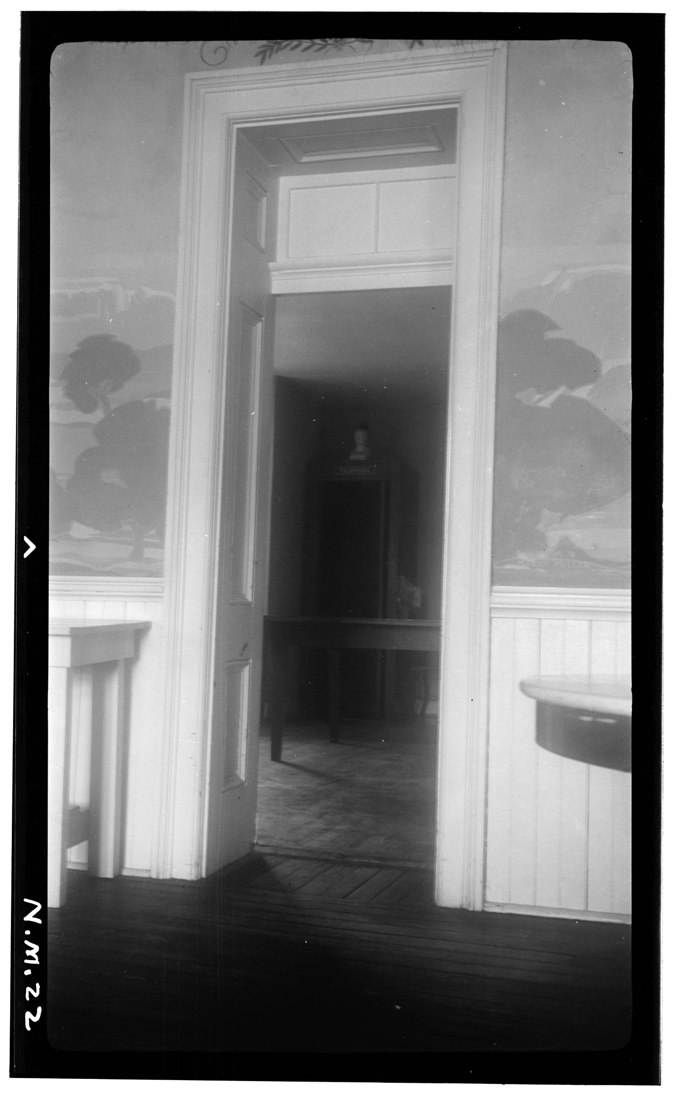
The CRE feature graphic combines original AI-assisted typography/texture with Frederick D. Nichols’s August 1936 HABS exterior photograph (Library of Congress, HABS NM,4-CIM,7-1; U.S. public domain). The photograph is reproduced as a separate inset with its historical content preserved. No artificial room, apparition, bullet hole or other purported evidence has been added. The archival interior photographs are not identified as Room 18; no unlicensed photograph of that room or the bullet-marked ceiling is reproduced.