

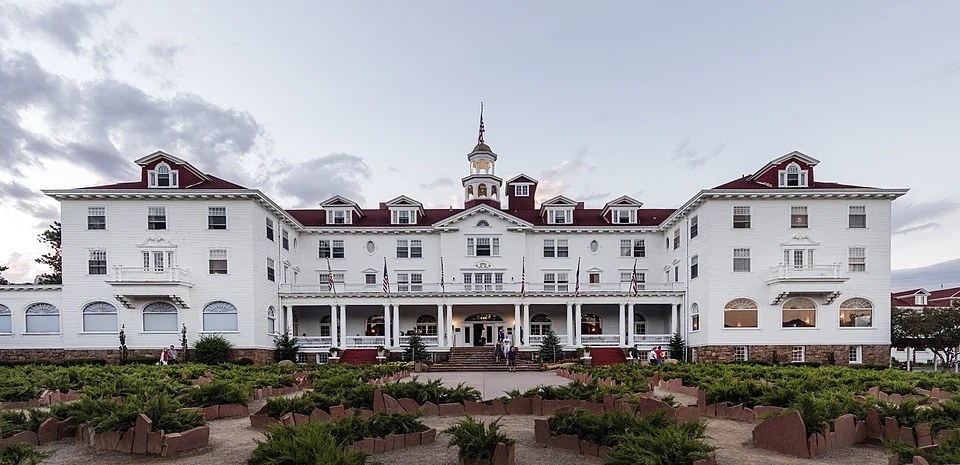
ESTES PARK, COLORADO — A grand hotel preparing to close for winter. Almost-empty corridors. A nightmare that would become a novel. Stephen King’s visit to the Stanley Hotel helped create The Shining, but the real Colorado landmark has a history and a haunting tradition of its own.
HAUNTED COUNTRY ROADS · October 24, 2026 Facebook feature · Expanded for the CRE website, October 31, 2026
Lead photograph: Carol M. Highsmith, 2015 / Gates Frontiers Fund Colorado Collection, Library of Congress. No known restrictions on publication. Source photograph; web-sized copy proportionally optimized.
A Mountain Hotel Before the Horror Story
The Stanley opened in 1909. Its name comes from Freelan Oscar Stanley, whose business history included the Stanley Steamer automobile. The hotel’s white facade and mountain setting belonged to an era of grand resort travel long before they acquired a place in horror culture.
That first identity is still visible. The building was designed to welcome travelers, not to frighten them. Its scale, corridors, and distance from the bustle of a city later offered a writer a setting that could be imagined differently.
The contrast helps explain the Stanley’s staying power. In daylight, it is an elegant historic hotel at the edge of the Rockies. In the imagination, those same corridors can become a place where a guest begins to listen too closely.
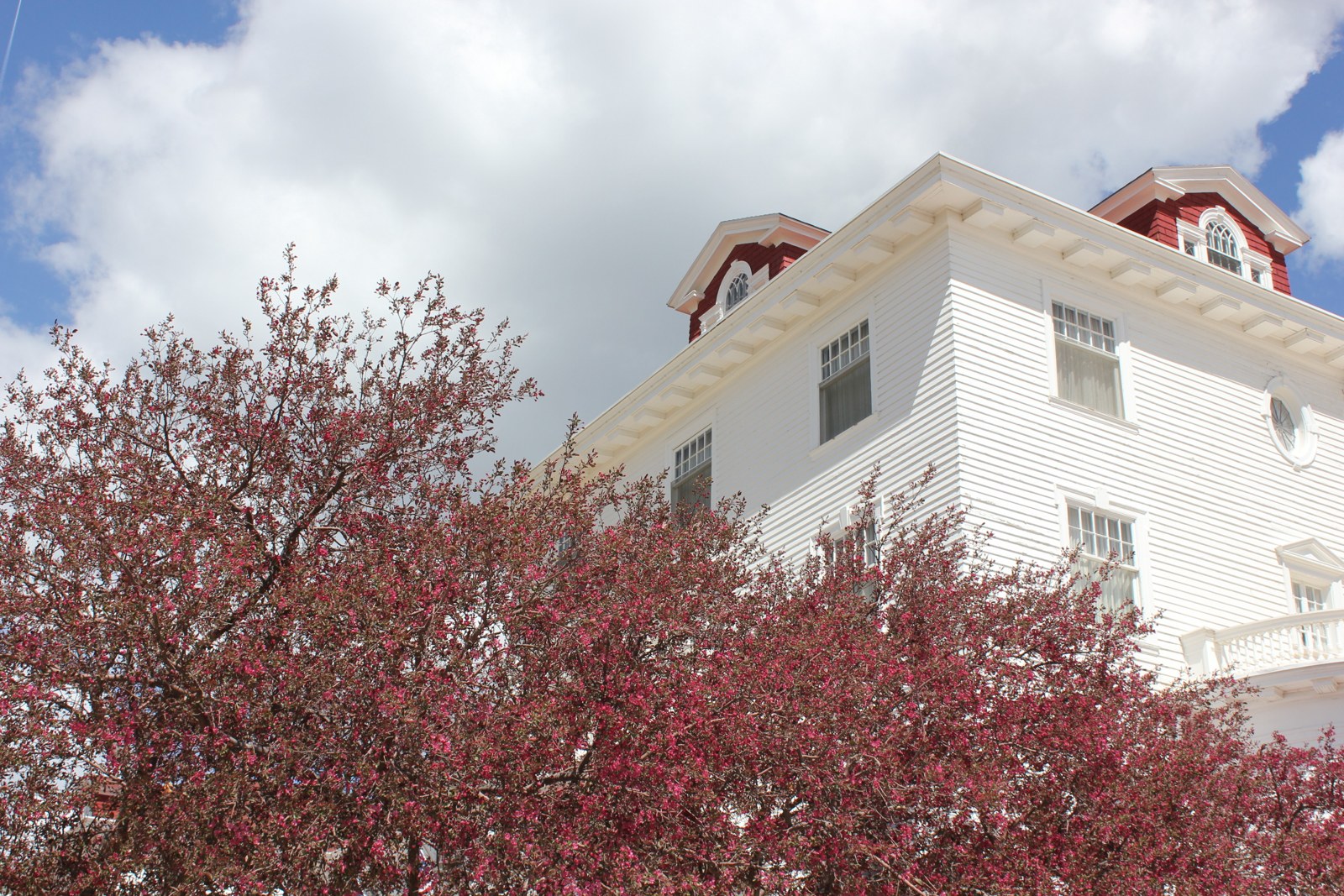
What King Actually Remembered
On his own website, King places his visit with his wife Tabitha in late September 1974. The hotel was about to close for the season, and they turned out to be its only guests. He recalled walking the corridors and recognizing the possibilities for a ghost story.
During the night, he dreamed of his young son being chased down a corridor by a fire hose. After waking, King began forming the story that would become The Shining.
It is a useful correction to the idea that the novel simply records a proven haunting. King describes a place, a dream, and a creative response. The fictional Overlook Hotel grew out of that experience; it is not a documentary account of the Stanley.
Room 217 and the Housekeeper’s Story
Room 217 connects the literary story with the hotel’s ghost tradition. It is widely identified as the room where King stayed. A separate legend concerns an early housekeeper, Elizabeth Wilson, who survived a gas explosion associated with the room in 1911.
Later accounts assign tidying, moving belongings, or other unexplained activity to Wilson’s spirit. The distinction is essential: surviving an accident is a historical claim that can be investigated; returning after death to attend to a room is a paranormal interpretation.
Our Facebook feature asked whether readers would spend the night in 217. The room number has become shorthand for an entire atmosphere: an old hotel, an empty hallway, and the thought that another presence might be just out of sight.
A Famous Setting Is Not Proof
The Stanley’s cultural reputation invites visitors to bring The Shining with them. That can shape expectations before they reach the front door.
Reports of unfamiliar sounds and encounters remain reports. An eerie feeling in an old building does not establish a supernatural cause, and a popular ghost tour does not convert a story into evidence.
The real appeal is broader. Historic architecture, mountain travel, literary imagination, and local legend meet here. A reader can appreciate all four without insisting they mean the same thing.
The Door at the End of the Hall
The enduring part of King’s account is how little he needed: a nearly empty hotel and a vivid dream. The rest came from a writer imagining what a beautiful place might hold after everyone else had gone.
For a modern visitor, that makes the Stanley a destination with two histories running beside each other: the resort that opened in 1909 and the hotel readers can never quite separate from a fictional winter caretaker.
Would you request Room 217, choose a different room but take the history tour, or admire the hotel from outside? Consult the hotel’s official site for current rooms, tours, and access; this feature does not promise availability in a particular room.
Keep exploring: Browse all Haunted Country Roads stories · The ghost of Room 18 at the St. James Hotel · Eddie’s firsthand night at Hotel Monte Vista.
Haunted Country Roads is an original Country Road Entertainment series about historic places, local legends, and unexplained experiences along America’s back roads. Reported hauntings are presented as claims, with their sources identified.
Sources and Photo Credits
- Stephen King — The Shining, author’s account of its inspiration
- The Stanley Hotel — official property information
- Library of Congress — Carol M. Highsmith photograph and historical description
- KPAX — reported housekeeper and Room 217 folklore
- CRE’s original Facebook feature — October 24, 2026
Photographs are documentary images, not claimed evidence of ghosts. Web copies are proportionally resized and JPEG-optimized; no people, apparitions, architectural features, or purported evidence have been generated or added. Creative Commons photographs retain their stated licenses; individual credits and source links appear above.