

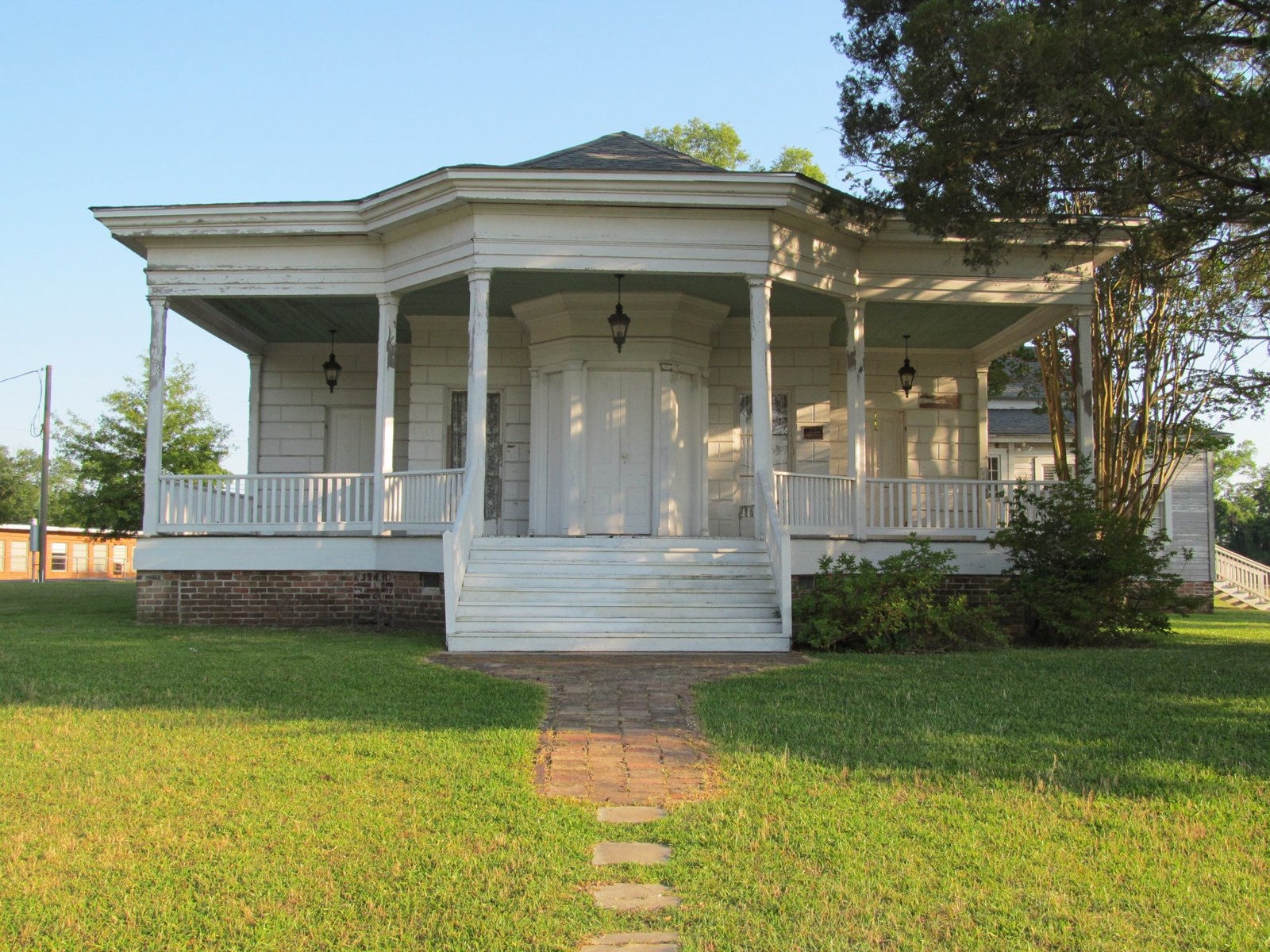
ELLISVILLE, MISSISSIPPI — A small historic house carries a large story. Confederate Major Amos McLemore was killed inside the Deason Home in 1863. Generations later, local traditions describe a stubborn bloodstain, unexplained footsteps, and a door said to open on the anniversary of the shooting. This Haunted Country Roads stop began with a suggestion from a longtime CRE follower.
HAUNTED COUNTRY ROADS · October 28, 2026 Facebook feature · Expanded for the CRE website, October 31, 2026
Lead photograph: Librarylady2726, July 2014 / Wikimedia Commons, CC BY-SA 3.0. Source photograph; proportionally resized.
A Modest House With an Unusual Front
The Deason Home is a one-story Greek Revival residence, not the enormous mansion a dramatic ghost-story illustration might suggest. Its distinctive entrance and wood siding designed to resemble masonry are part of its architectural importance.
Published dates for its construction vary. The Daughters of the American Revolution marker description uses approximately 1845, while the home’s own published material also uses 1847. The safest description is a mid-nineteenth-century house rather than false precision about a single construction year.
Amos and Eleanor Deason were the original family associated with the home. Its long family history and surviving architecture matter independently of the violent event that made it notorious.
The Killing in 1863
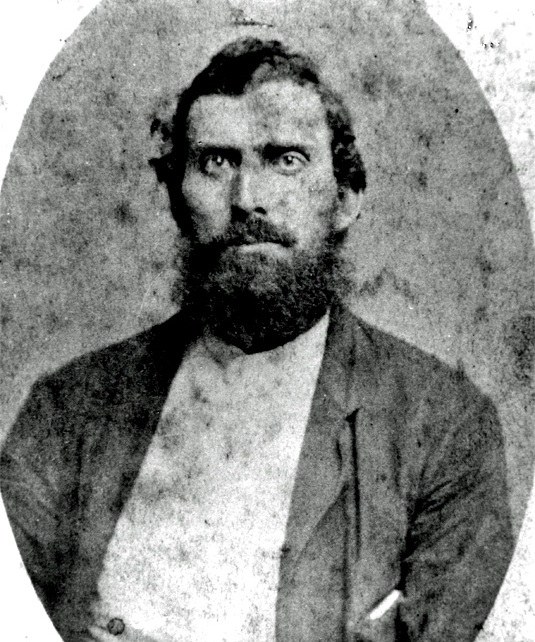
On October 5, 1863, Major Amos McLemore was shot at the house. He had been sent to the region amid the Confederacy’s struggle to control deserters, including men associated with Newton Knight.
Knight is widely named as the suspected shooter. The home’s own account says he was believed responsible but was never tried for the crime. That qualification belongs in the story: a familiar attribution should not be recast as a courtroom verdict.
The wider history of Jones County includes resistance to Confederate authority, local loyalties, hardship, and wartime violence. Mississippi History Now places Knight within that complicated setting. The killing cannot be understood only as the first scene in a ghost story.
The Bloodstain and the Anniversary Door
Local lore says the floor retained a bloodstain that could not be permanently removed. Another tradition holds that the door to the room opens on the anniversary of McLemore’s death.
The home’s published account describes the anniversary-door story and reports of footsteps, shadows, unexplained movement, and rocking chairs moving without an apparent cause. These are attributed haunting claims. CRE has not observed or independently verified them.
Their appeal comes partly from their scale. This is a domestic interior, a place where a door or a chair should behave in familiar ways. The stories introduce uncertainty into something ordinary.
A Place Worth Preserving
The Tallahala Chapter of the National Society Daughters of the American Revolution owns and preserves the home. Historic recognition reflects its architecture and association with local history, not a government finding that the building is haunted.
That distinction strengthens the visit. The real structure offers something more useful than an imagined oversized mansion: the chance to consider how a small house became entangled with a large and bitter conflict.
This feature began because a CRE follower pointed us toward the location. That is part of the purpose of Haunted Country Roads: readers can help uncover places that deserve a closer look beyond the best-known hotel and theatre legends.
Would You Wait for the Door?
A killing happened here. The later legends ask whether something of that night remains. Those are two different questions, and the house is compelling enough to hold both without confusing them.
If you were visiting, would you spend your time studying the unusual facade or watching the door to the room where the shooting occurred?
Use the home’s current visitor contacts to confirm tours and access. Older schedules and paranormal-event listings may no longer apply. No overnight access or anniversary occurrence is promised by this feature.
Keep exploring: Browse all Haunted Country Roads stories · The ghost of Room 18 at the St. James Hotel · Eddie’s firsthand night at Hotel Monte Vista.
Haunted Country Roads is an original Country Road Entertainment series about historic places, local legends, and unexplained experiences along America’s back roads. Reported hauntings are presented as claims, with their sources identified.
Sources and Photo Credits
- Daughters of the American Revolution — Amos Deason Home historic property record
- The Deason Home — operator’s history and reported hauntings
- Mississippi History Now — Newton Knight and the Free State of Jones
- Society of Architectural Historians — Amos Deason House
- Historical Marker Database — Newt Knight and the Deason Home
- CRE’s original Facebook feature — October 28, 2026
Photographs are documentary images, not claimed evidence of ghosts. Web copies are proportionally resized and JPEG-optimized; no people, apparitions, architectural features, or purported evidence have been generated or added. Creative Commons photographs retain their stated licenses; individual credits and source links appear above.